You know what needs to change.
So why does the pattern keep returning?
Where Experience Meets Science.
Turning insight into lasting change.
Discover your pattern. Experiment with a different response. Gather evidence that helps you see what is possible.
Clarity. Courage. Change.
Why do some patterns survive even after we understand them?
You recognise what’s happening. You promise yourself you’ll respond differently next time. Then the moment arrives, and the familiar response returns.
A moment that matters.
A meeting, a difficult conversation or a decision you keep avoiding.
The old pattern appears.
You become quieter, chase perfection, overthink or criticise yourself.
There is another possibility.
Not a perfect new personality, but one deliberate, observable response.
Change rarely starts with an answer.
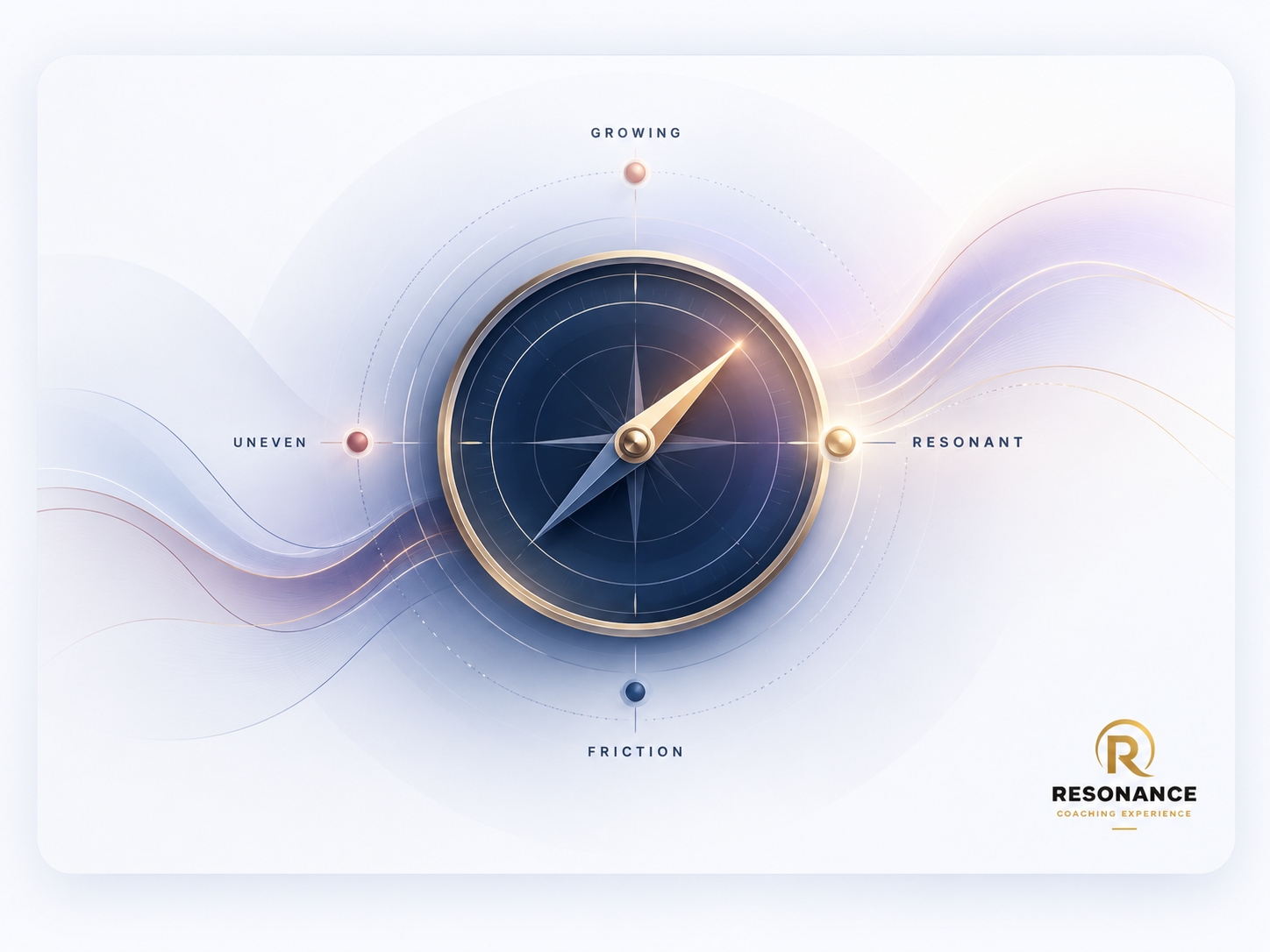
It starts with noticing where you are. Choose what feels closest right now.
Stuck can mean the system needs orientation before action.
Before forcing a solution, RCE explores what feels unclear, competing or unresolved and what deserves attention first.
Explore this further →Insight may be present while integration is missing.
RCE looks beyond willpower to identity tension, hidden payoff, emotional protection, context and missing lived evidence.
Explore this further →Repetition is often information.
Before trying harder, RCE explores what the pattern may be protecting, maintaining or trying to solve.
Explore this further →Transitions create a space between identities.
RCE helps explore what needs to be released, what needs to be carried forward and what new evidence the emerging self needs.
Explore this further →Leadership growth often starts with presence and choice.
RCE explores how identity, emotional regulation, context, relationships and intention shape the way leadership is experienced by others.
Explore this further →Notice what happens before you react.
Think of a real situation in which your familiar response shows up.
Choose what feels closest. This is reflection, not diagnosis, and nothing is submitted or saved.
What do you tend to do?
I become smaller or quieter.
Notice the urge to hold back. What one useful sentence could you try contributing, even before you feel confident?
I try to get everything perfect.
Imagine offering a useful, imperfect version. What small, safe experiment would give you feedback from reality?
I am angry at myself for getting distracted.
Notice the distraction and your second reaction to it. Could your next move be curiosity rather than self-criticism?
I keep thinking but never begin.
What is a tiny step you could take once, without making a promise about the whole future?
Notice: a changed perspective, an intention and an actual action are different things.
Confidence doesn’t always have to come first. An experiment can help you discover what actually happens when you try.
Insight matters. Action creates new information.
RCE combines awareness, emotional regulation, behavioural experiments and reflection. These are research-informed principles brought together into a practical coaching journey.
Learning through experience.
Albert Bandura’s work describes how experiences of mastery may strengthen a person’s belief in their ability to act.
From intention to response.
Research on implementation intentions suggests that specific if-then plans can support goal-directed action.
From reflection to learning.
Recognise, choose, experiment and observe. The RCE framework puts these ideas into a coaching process, while tracking what really changes.
Research supports these underlying psychological principles. The complete RCE method has not been independently validated as a unified intervention; no higher success rate is claimed.
Thirteen phases. One human journey.
A map, not a rigid checklist. RCE moves from inner noise toward greater choice, integration and impact.
What could you try before you fully believe you can?
Take one meaningful step. Notice the result. Learn from what actually happened.
Recognise the trigger.
Name one real situation where your pattern is likely to appear.
Make a tiny if-then plan.
“If this happens, then I will try this one alternative response.”
Collect evidence.
What did you actually do? What happened? What could you repeat or adapt?
The goal is learning, not instant transformation. A cognitive shift, a completed experiment and a sustained change should be assessed separately.
Where is change asking for attention?
Choose what feels closest to your experience right now. There is no perfect answer, only a useful signal.
Bring a real situation. Leave with a new question worth exploring.
Personal change, leadership or a transition: an RCE conversation starts with the challenge you actually face.